
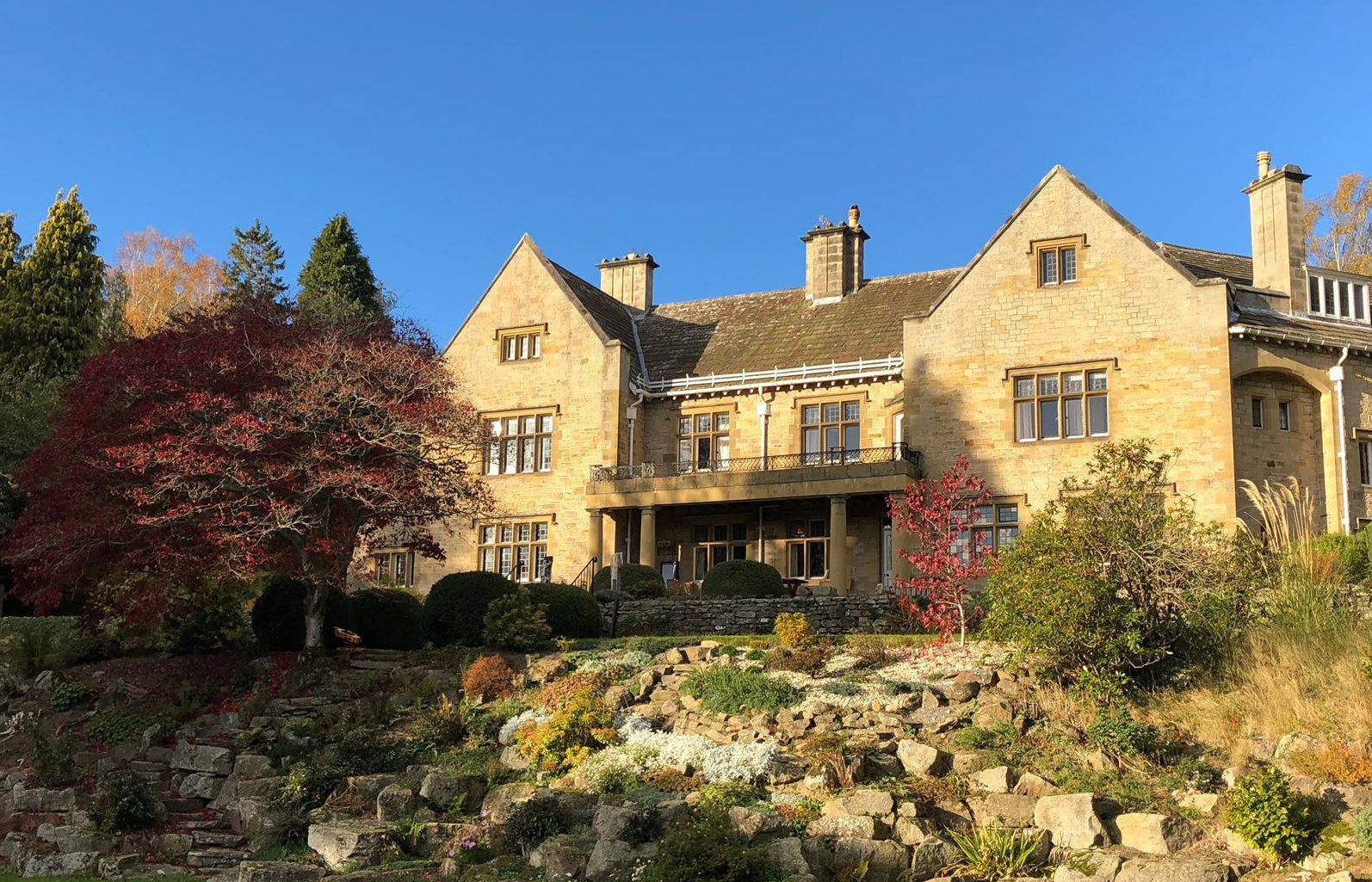
Shepherds Dene Retreat House Northumberland, England Monday 4th - Saturday 9th October 2027
Wild Saints
& Green Men
with Paul Kingsnorth and Caroline Ross
Wild Saints and Green Men is a unique five-day course run by award-winning writer Paul Kingsnorth, and wild materials artist and author Caroline Ross, designed to immerse participants in what the Christian mystic Hildegard von Bingen called the ‘holy greenness’ of creation.
Wild Saints and Green Men begins with a simple observation: that the beauty of the natural world reflects the beauty of its creator. In all healthy cultures, both the beauty of nature and the power of God are reflected in art, architecture, poetry and song. Britain’s heritage is full of such sacred beauty: green men on the roof bosses of ancient rural churches; gothic cathedrals which soar like forests; stained glass windows; holy wells; the relics of saints, whose stories and prayers once tied this sacred landscape together.
Despite the destruction of our sacred landscapes by the Reformation, and the money-worship of secular modernity, the landscape of the saints can still be found not far below the surface. What happens when writers and artists use their pens to excavate it? What will emerge into the light?
This week, we aim to find out.
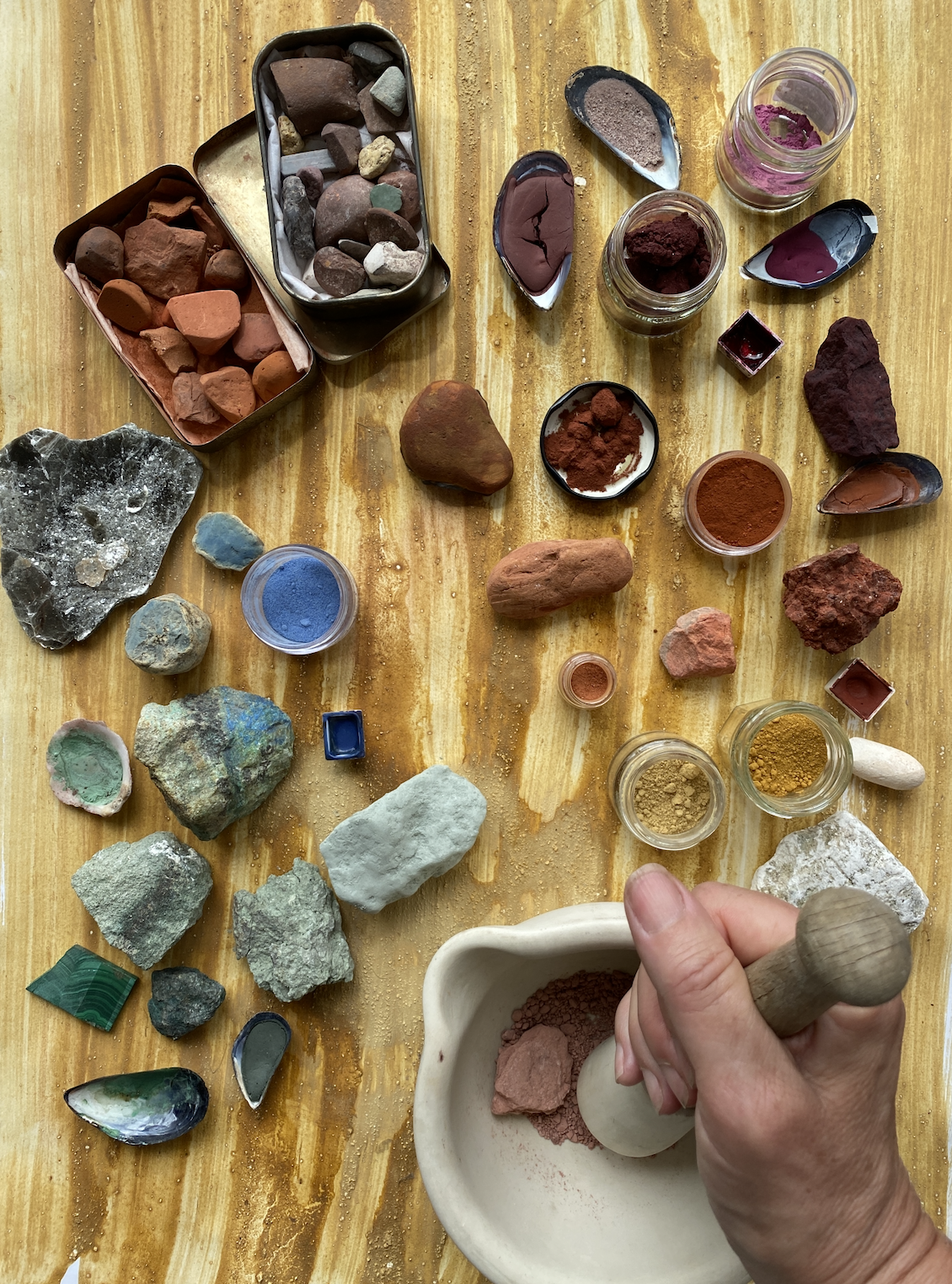
You will learn and practice techniques of writing and art which immerse you in nature and alter your perspective on the human relationship with the wild. Spend time outside writing from the perspective of a non-human character. Explore the stories of the wild saints of Britain and further afield. Make paints from foraged rocks, and paintbrushes from swan feathers. Meet other writers and artists, and work alongside them. Spend five days working on a final project, inspired by a wild landscape which the poet Gerard Manley Hopkins said was ‘charged with the grandeur of God’.
Wild Saints and Green Men builds on the stories featured in Paul’s forthcoming Book of Wild Saints which will be published a week before the course begins, and on the tradition of wilderness saints, sacred landscapes and the holiness to be found in the wild world. It will draw deeply from the Christian wilderness tradition, in which God is ‘everywhere present and filling all things.’ This understanding of the world of matter and spirit can be traced from the Gospels through the Desert Fathers to the carvings on English cathedrals and the poetry of John Donne and Christina Rossetti. But we will draw too on the insights of other traditions, including the Tao, the ‘way of nature’. Nature and uncontrived beauty are revered across religions, both as a pattern for adornment of holy spaces and as a metaphor for how to approach God. The course is open to people of all faiths and none.
What happens when we reignite the spirit within our use of words, when we let the curve of a leaf or the angle of the light truly illuminate our minds, and the divine nature of all created things? How can our art and writing be fired by the world outside - and what happens when we literally create our art from the world around us?
Contemporary life exhausts us. It undermines goodness, and encourages us to mistrust simplicity, nature and beauty. We invite you to join us for five days immersed in the richness of Northumbrian nature, in real beauty, in meaningful art and language. Together we will walk away from the machinations of so-called artificial intelligence, and step towards our own human, hand-made creativity.
*
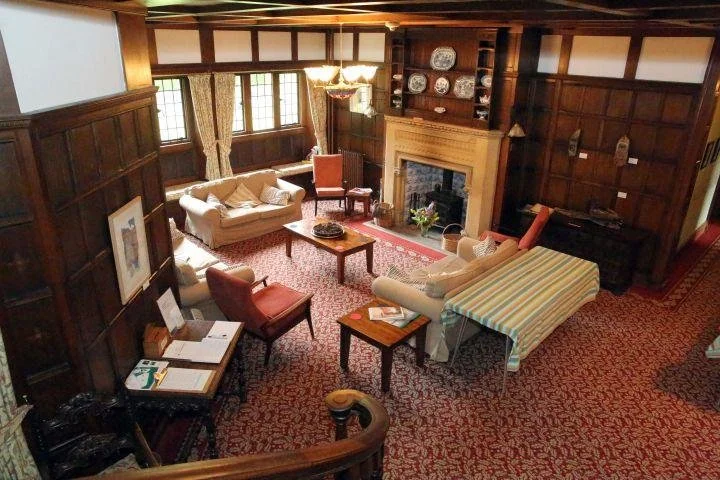
Wild Saints and Green Men will take place at the beautiful Shepherds Dene centre in Northumberland. Set in 26 acres of parklands and garden, Shepherds Dene offers both beauty and comfort. The cost of Wild Saints and Green Men includes full board with delicious home cooked food and snacks, and all the equipment that will be needed for the course. All you need to bring is a notebook and pen, a good pair of boots - and a raincoat!
Accommodation options at Shepherds Dene are a mix of single, double and shared rooms. Friends, partners or family members booking together should let us know in advance, so that we can allocate your accommodation accordingly. If you would like to request a particular type of room before booking, please send us an email. Otherwise, we will allocate a single or a men's or women's shared room as appropriate. There are twenty-four places available on the course, which will be allocated on a first-come, first-served basis.
You can read more about Paul and Caroline, and get a taste of what this course offers, below. If you have any questions before booking a place, please feel free to email us, and we will try our best to answer them.
_____________________________________________________________________________________________________
❋ Wild Materials
Make your own paints and brushes, and learn how to forage for colours and make art materials from what nature provides.
❋ Create your own Project
Work for the week with pen, paper and wild materials to create a project inspired by wild saints and sacred landscapes.
❋ Writing in Nature
Outdoor writing exercises designed to alter the way you see the natural world, and change how your words can illuminate it.
“Everything that lives is holy.”
William Blake
“Ideas create idols. Only wonder leads to knowing.”
St. Gregory of Nyssa
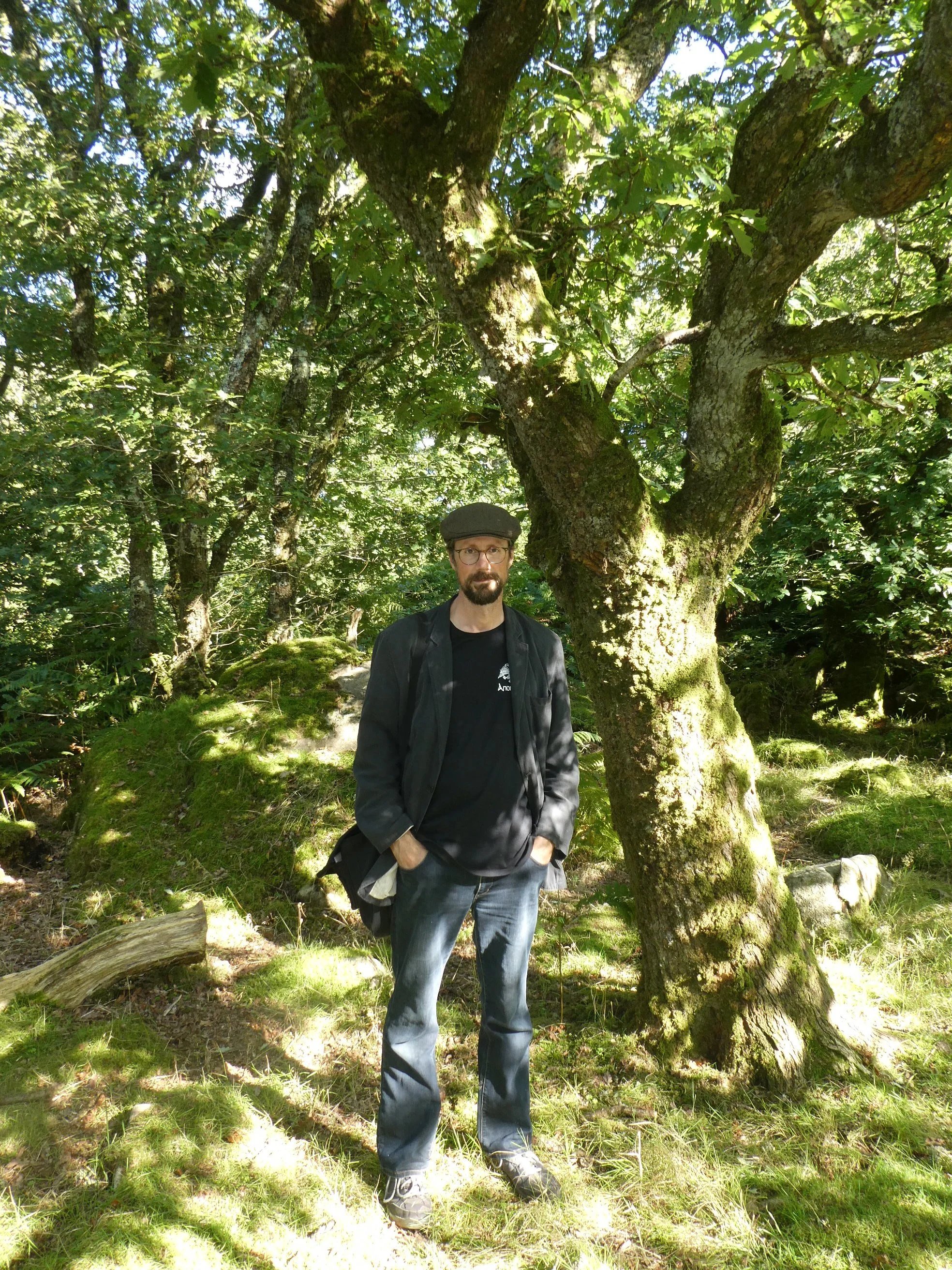
Paul Kingsnorth
Paul is an award-winning novelist, poet and essayist. He is the author of eleven books, including the Booker Prize-longlisted novel The Wake (2014) and the recent New York Times bestseller Against The Machine (2025). His books have been translated into over a dozen languages.
Paul began writing professionally in the mid-1990s. He worked for a while as a trainee journalist in Fleet Street, before leaving to become the in-house writer for an environmental campaign group in London. Later he was deputy editor of The Ecologist magazine for two years, before leaving to write his first book, One No, Many Yeses (2003). His second book, Real England (2008), a tour around a country losing its character to the forces of corporate globalisation, was quoted in speeches by the Prime Minister and the Archbishop of Canterbury. The Independent called it 'a watershed study.'
In 2009, Paul co-founded the Dark Mountain Project, an international network of writers and artists creating new stories for an age of upheaval and collapse.
In 2014 he published his first novel, The Wake. Set in the aftermath of the Norman Conquest of England, and written entirely in its own version of Old English, the novel was longlisted for the Booker Prize, shortlisted for the Goldsmiths Prize and won the Gordon Burn Prize. Paul's second novel, Beast, was published in 2016. Together with his 2021 follow-up Alexandria, it completed a thematic whole: the Buckmaster Trilogy.
His 2025 non-fiction book Against The Machine became a New York Times bestseller on publication, and is currently in translation in nine different languages. The TLS called it 'Allen Ginsberg updated for the internet age.'
Paul has also published three collections of poetry. In 2026, he founded his own artisan publishing house, Hermit Crab Press with his wife Navjyoat.
You can read more about Paul, his books and his past work on his personal website.
“The world is charged with the grandeur of God.”
Gerard Manley Hopkins
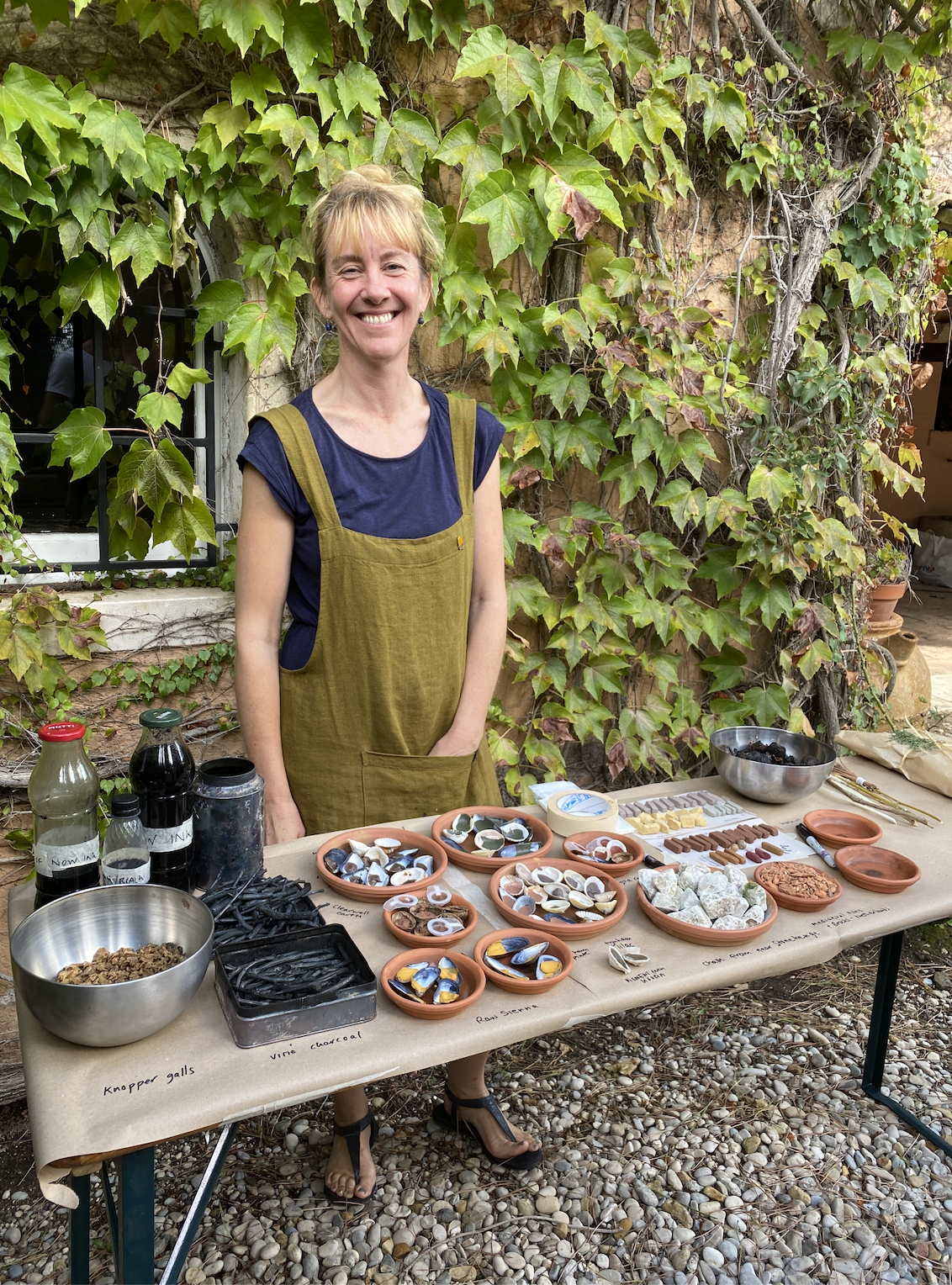
Caroline Ross
Caroline studied at Chelsea School of Art for her Masters in Painting but left the 1990s art world to pursue music and T'ai Chi. Inspired by studying Renaissance methods at the Royal Drawing School, and after reading Paul’s novel The Wake (set in 1066) she at last found the natural materials to make her art without recourse to plastics, screens and toxic substances. She returned to visual art after 15 years teaching T'ai Chi and alongside Paul created Wild Twins, a ground-breaking art and writing course that ran four times between 2018 and 2020.
Her bestselling debut book Found and Ground: A Practical Guide to Making your own Foraged Paints was published by Search Press in 2023. The follow up book about ancient and foraged drawing materials, Drawn From the Wild was published in 2025.
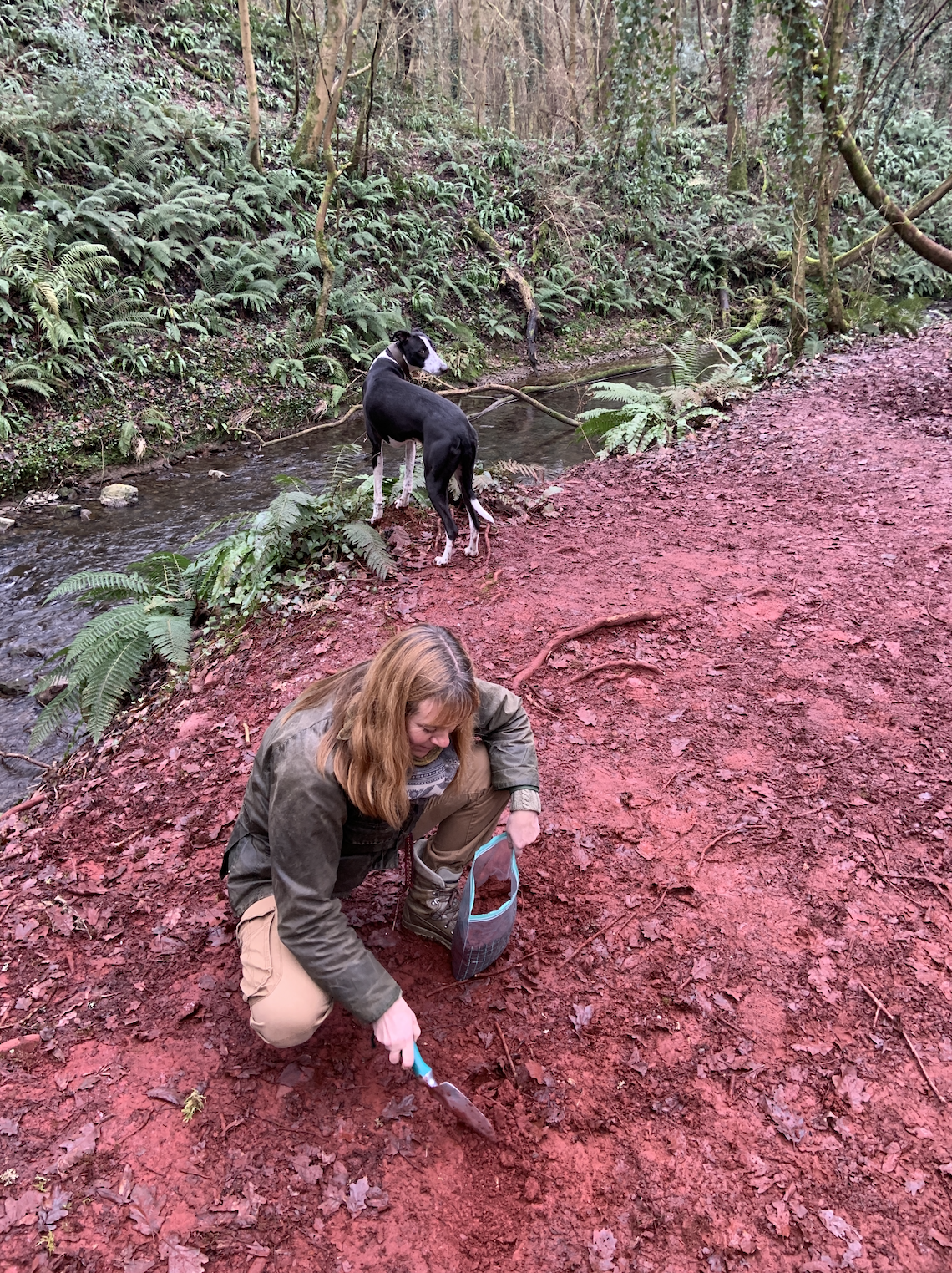
Using what nature provides, and repurposing what humans discard, are a large part of her practice. After the rooks have feasted on the riverbank, the empty mussel shells become paint palettes. The seasonally moulted flight feathers of local swans and geese become quill pens and brushes. Chalk dug out from their setts by badgers is left in piles in the woods, where she gathers it and take it home to make gouache and pastels. Caroline makes paints from ethically foraged earth pigments from around the UK, and art tools and inks from natural, wild, and found materials such as oak galls, rusty nails, elderberries, walnut husks and cherry tree gum.
Caroline researches, publishes and teaches workshops on many aspects of art and materials. She teaches online with plantsandcolour.co.uk and runs popular residential five day courses both with Plants and Colour and West Dean College, as well as internationally.
“If you don’t love trees, you don’t love God.”
St Nikephoros of Chios
“ The universe isn’t a machine after all.
It’s alive and kicking.”
D. H. Lawrence